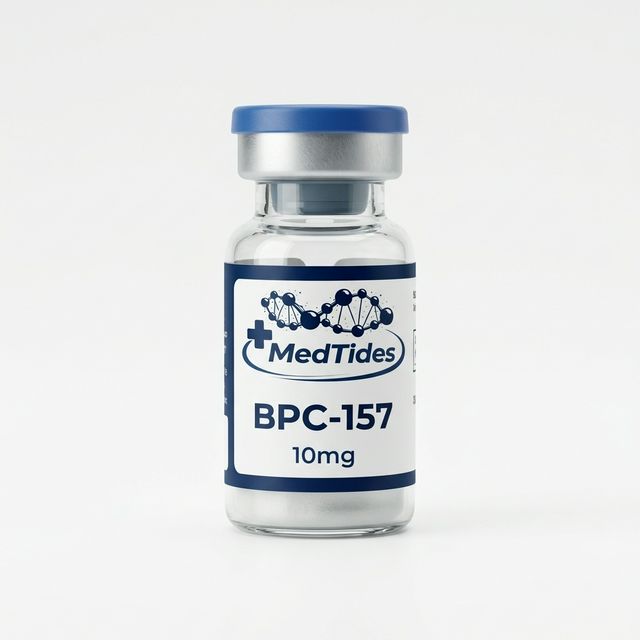
Sequence: Gly-Glu-Pro-Pro-Pro-Gly-Lys-Pro-Ala-Asp-Asp-Ala-Gly-Leu-Val
What Is BPC-157?
BPC-157 stands for Body Protection Compound-157. It is a synthetic 15-amino-acid peptide derived from a protein found naturally in human gastric juice. First isolated and characterized by Professor Predrag Sikiric's research group at the University of Zagreb in the 1990s, it has since become one of the most extensively studied peptides in preclinical research [1].
The "body protection" name comes from early observations in animal models, where the peptide appeared to protect various organ systems from experimentally induced damage. However, it's important to emphasize: all published BPC-157 data comes from in-vitro cell culture or animal model studies. No completed human clinical trials exist as of 2026.
What Pathways Has Research Investigated?
Published studies have explored BPC-157's interactions with multiple biological signaling systems:
1. The FAK-Paxillin Pathway
Focal Adhesion Kinase (FAK) and paxillin are proteins involved in cell adhesion — how cells attach to surfaces and to each other. Studies in cell culture models have shown that BPC-157 appears to influence FAK-paxillin signaling, which is relevant to how tissues maintain structural integrity [2].
2. The Nitric Oxide (NO) System
Multiple studies have investigated BPC-157's interaction with the nitric oxide system — a key signaling pathway involved in blood vessel dilation, inflammation, and cellular communication. In animal models, researchers observed effects on both NOS (nitric oxide synthase) enzyme activity and downstream NO signaling [3].
3. Growth Factor Expression
In-vitro studies have examined BPC-157's effects on several growth factor receptors, including:
- VEGF (Vascular Endothelial Growth Factor) — involved in blood vessel formation
- EGF (Epidermal Growth Factor) — involved in cell proliferation
- FGF (Fibroblast Growth Factor) — involved in tissue development [4]
4. Neurotransmitter Systems
Animal model studies have also investigated BPC-157's interactions with the dopaminergic and GABAergic systems — two major neurotransmitter pathways in the brain. These studies suggest the peptide may influence central nervous system signaling, though the mechanisms are not yet fully characterized [5].
What the Research Shows — and Doesn't Show
It's important to be honest about the current state of the evidence:
What we know: BPC-157 has been studied in over 120 published papers, primarily from one research group (Sikiric et al., University of Zagreb). The preclinical data is extensive and consistent across multiple animal models and injury types.
What we don't know: Whether any of these findings translate to humans. The absence of completed human clinical trials means we cannot make any claims about therapeutic efficacy, safety, dosing, or side effects in humans.
This is a critical distinction. Many websites present preclinical (animal) data as if it applies directly to humans. It doesn't. The history of drug development is filled with compounds that showed promise in animal models but failed in human trials. BPC-157 may be different — but until the clinical data exists, we simply don't know [6].
Current Regulatory Status
BPC-157 is not FDA-approved for any therapeutic use. In 2023, the FDA included BPC-157 on its list of substances it considers "demonstrating potential safety signals" and has increased scrutiny of its sale as a research chemical. It is not approved as a drug, dietary supplement, or food additive [7].
The compound remains available for legitimate laboratory research purposes, but any use outside of that context is unregulated and potentially unsafe.
The Bottom Line
BPC-157 is one of the most extensively studied peptides in preclinical research, with a consistent body of evidence from in-vitro and animal model studies. However, the complete absence of human clinical trial data means it remains firmly in the research phase. If and when human trials are completed, our understanding of this peptide will change dramatically.
Until then, the honest answer is: the preclinical data is promising, but we need human data to know if any of it matters.
Sources
- Sikiric, P. et al. (2018). "Stable gastric pentadecapeptide BPC 157 and wound healing." Frontiers in Pharmacology, 9, 1446. PubMed: 30574092
- Seiwerth, S. et al. (2014). "BPC 157's effect on healing." Journal of Physiology, 28(2), 175-198. PubMed: 25269700
- Sikiric, P. et al. (2023). "BPC 157 and the nitric oxide system." Pharmaceuticals, 16(5), 768. PubMed: 37242556
- Chang, C.H. et al. (2011). "BPC 157 enhances the growth hormone receptor expression." Life Sciences, 88(7-8), 280-288. PubMed: 21167183
- Sikiric, P. et al. (2016). "Brain-gut axis and pentadecapeptide BPC 157." Current Neuropharmacology, 14(8), 857-865. PubMed: 27138903
- Vukojevic, J. et al. (2022). "Rat tendon healing with BPC 157." Journal of Orthopaedic Surgery and Research, 17, 235. PubMed: 35459206
- U.S. Food and Drug Administration (2023). "FDA Safety Reporting Portal — BPC-157." fda.gov