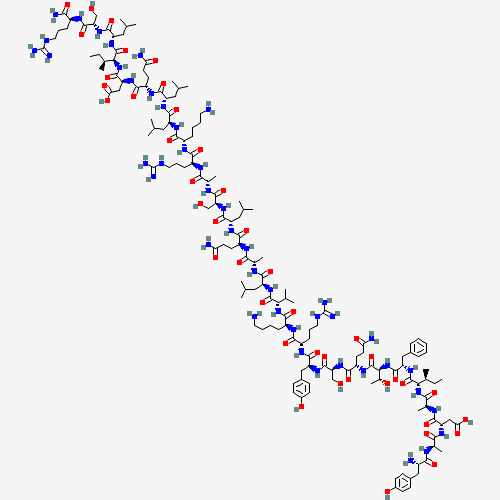
CJC-1295
GHRH Analog
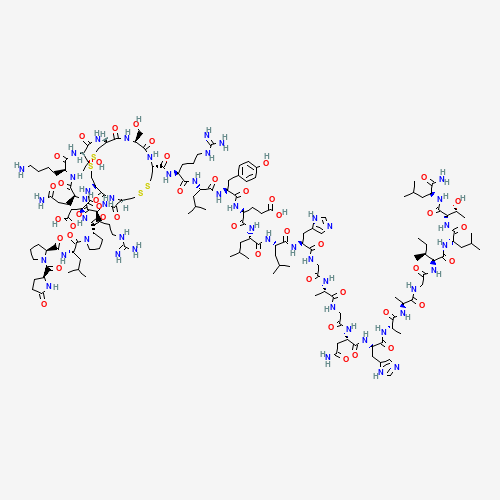
HGH 191AA
Somatotropin
| Property | CJC-1295 | HGH 191AA |
|---|---|---|
| Category | GHRH Analog | Somatotropin |
| Formula | 30 amino acids + DAC | 191 amino acids |
| Molecular Weight | 3,367.97 g/mol | 22,124 Da |
| Published Studies | 20+ | 500+ |
| Clinical Status | Preclinical Research | FDA-Approved (Rx Only) |
| Overview | A modified 30-amino-acid GHRH analog with DAC conjugation capability studied for somatotropin release signaling. | A 191-amino-acid recombinant growth hormone studied for GH-R/JAK2-STAT5 signaling and IGF-1 axis modulation. |
CJC-1295 — Key Details
What Is CJC-1295?
CJC-1295 is a synthetic 30-amino-acid analog of Growth Hormone Releasing Hormone (GHRH residues 1-29) with a modification at the 2nd, 8th, 15th, and 27th amino acid positions. It was developed by ConjuChem Biotechnologies. The "DAC" variant (Drug Affinity Complex) is designed to bind to serum albumin for extended half-life.
Mechanism of Action
CJC-1295 binds to GHRH receptors on pituitary somatotroph cells, stimulating the natural pulsatile release of growth hormone. Unlike exogenous GH, it works through the body's own regulatory feedback loop. The DAC modification extends its half-life from minutes (native GHRH) to approximately 6-8 days.
Research Context
- Original Phase 2 clinical trial data from ConjuChem showed sustained GH elevation
- Clinical development was discontinued after a study subject death (unrelated per investigators)
- CJC-1295 without DAC (mod GRF 1-29) is used as a research tool in in-vitro GHRH receptor binding studies
Sources
- According to Teichman, S.L. et al. (2006). "Prolonged stimulation of growth hormone (GH) and insulin-like growth factor I secretion by CJC-1295." JCEM, 91(3), 799-805. [PubMed]
- According to Alba, M. et al. (2006). "Once-daily administration of CJC-1295 maintains GH levels." JCEM, 91(5), 1575-1581. [PubMed]
HGH 191AA — Key Details
What Is HGH 191AA?
HGH 191AA refers to recombinant human growth hormone — a 191-amino-acid protein identical to the somatotropin produced by the anterior pituitary gland. FDA-approved forms (Humatrope®, Norditropin®, Genotropin®) are prescription drugs used to treat growth hormone deficiency.
How It Works
Growth hormone binds to GH receptors on cell surfaces, activating the JAK2-STAT5 signaling pathway. This triggers the liver to produce IGF-1 (Insulin-like Growth Factor 1), which mediates most of GH's downstream effects on tissue growth, protein synthesis, and lipid metabolism.
Regulatory Status
FDA-approved as a prescription drug for growth hormone deficiency, Turner syndrome, chronic kidney disease, and Prader-Willi syndrome. Off-label use or distribution outside of legitimate medical prescriptions is a federal crime under the 1990 Anabolic Steroids Control Act. Research-grade somatotropin is used as a reference standard in binding assays.
Sources
- According to Ranke, M.B. & Wit, J.M. (2018). "Growth hormone — past, present and future." Nature Reviews Endocrinology, 14, 285-300. [PubMed]
- According to Møller, N. & Jørgensen, J.O. (2009). "Effects of growth hormone on glucose, lipid, and protein metabolism." Endocrine Reviews, 30(2), 152-177. [PubMed]