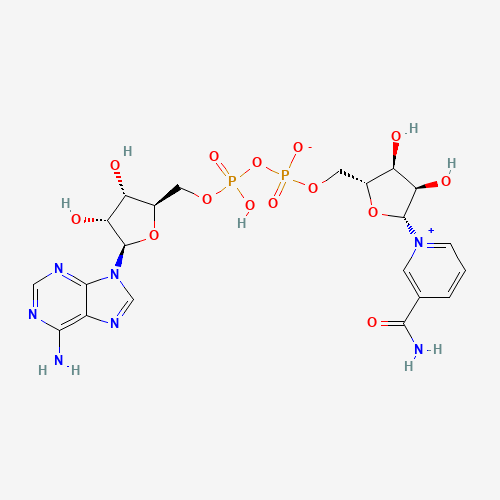
NAD+
Dinucleotide Coenzyme
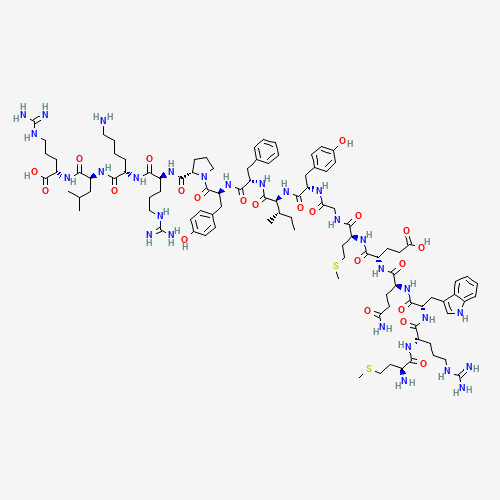
MOTS-c
Mitochondrial Peptide
| Property | NAD+ | MOTS-c |
|---|---|---|
| Category | Dinucleotide Coenzyme | Mitochondrial Peptide |
| Formula | C₂₁H₂₇N₇O₁₄P₂ | C₁₀₁H₁₅₂N₂₈O₂₅S₃ |
| Molecular Weight | 663.43 g/mol | 2,174.6 g/mol |
| Published Studies | 1,000+ | 30+ |
| Clinical Status | Clinical Trials Ongoing | Early Research Phase |
| Overview | Essential coenzyme in every cell. Research focuses on sirtuin enzyme activation, DNA repair, and age-related NAD+ decline. | A 16-amino-acid peptide encoded within mitochondrial DNA. Studied for AMPK pathway activation and exercise-mimetic signaling. |
NAD+ — Key Details
What Is NAD+?
Nicotinamide Adenine Dinucleotide (NAD+) is a coenzyme found in every living cell. Discovered in 1906 by Arthur Harden and William John Young, it is essential for cellular energy production (ATP synthesis), DNA repair, and gene regulation. Without NAD+, cells cannot survive.
Why NAD+ Declines With Age
Research has shown that NAD+ levels decline by approximately 50% between ages 40–60. This decline is associated with reduced sirtuin enzyme activity (SIRT1-SIRT7), impaired PARP-mediated DNA repair, and mitochondrial dysfunction. The cause of this decline involves increased CD38 enzyme activity that consumes NAD+.
Key Research Areas
- Sirtuin activation — NAD+ is the required substrate for all 7 sirtuin enzymes involved in chromatin remodeling and metabolic regulation
- PARP enzymes — NAD+ fuels poly(ADP-ribose) polymerases critical for DNA damage repair
- Mitochondrial function — NAD+ is required for Complex I of the electron transport chain
- NAD+ precursors — NMN and NR (nicotinamide riboside) are being studied as supplements to boost NAD+ levels
Sources
- According to Imai, S. & Guarente, L. (2014). "NAD+ and sirtuins in aging and disease." Trends in Cell Biology, 24(8), 464-471. [PubMed]
- According to Rajman, L. et al. (2018). "Therapeutic potential of NAD-boosting molecules." Cell Metabolism, 27(3), 529-547. [PubMed]
- According to Verdin, E. (2015). "NAD+ in aging, metabolism, and neurodegeneration." Science, 350(6265), 1208-1213. [PubMed]
MOTS-c — Key Details
What Is MOTS-c?
MOTS-c (Mitochondrial Open Reading Frame of the 12S rRNA Type-c) is a 16-amino-acid peptide encoded within the mitochondrial genome. Discovered in 2015 by Dr. Changhan David Lee at the University of Southern California, it was the first mitochondria-derived peptide shown to have systemic metabolic effects.
Why It's Unique
Unlike most signaling peptides encoded by nuclear DNA, MOTS-c is encoded by mitochondrial DNA — the separate genome inside our energy-producing organelles. This discovery challenged the long-held view that mitochondria only produce energy, revealing they also produce signaling molecules.
Investigated Mechanisms
- AMPK pathway activation — AMP-activated protein kinase, the master regulator of cellular energy homeostasis
- AICAR-mimetic signaling — MOTS-c activates AMPK through AICAR accumulation in the folate-methionine cycle
- Exercise-mimetic properties — animal studies show MOTS-c levels increase during exercise
- Insulin sensitivity — preclinical data shows improved glucose uptake in muscle cells
Sources
- According to Lee, C. et al. (2015). "The mitochondrial-derived peptide MOTS-c promotes metabolic homeostasis and reduces obesity." Cell Metabolism, 21(3), 443-454. [PubMed]
- According to Reynolds, J.C. et al. (2021). "MOTS-c is an exercise-induced mitochondrial-encoded regulator of age-dependent physical decline." Nature Communications, 12(1), 470. [PubMed]